Friday, 22 November 2013

Mehndi Designs For Hands

Mehndi Designs For Hands Biography

Source(google.com.pk)
If you are looking for the Pakistani mehndi designs for hands then this post will going to be much informative for you. Mehndi has always been said to be the most imperative ingredients on the weddings and even on the religious festivals. There are three main types of the mehndi designs adding with the Arabic mehndi designs, Indian mehndi designs and Pakistani mehndi designs. All of these three designs have been known for their own uniqueness and simple stroke quality. In this post we will be sharing few pictures of Pakistani mehndi designs for hands. One of the most prominent features in the Pakistani mehndi designs is the appearance of the floral designs and patterns that have been much eye catching ones for the women. There are many Pakistani mehndi designs 2013 for the women that have been set for both the sides of the hands. The women can even make the hands attractive looking with the utilization of the glitters as well. The women can search out from the internet as the websites has been complete loaded with such dazzling new mehndi designs. In addition, some of the pictures are even sharing up the block designing along with the peacock versions as well.

So this was all for the Pakistani mehndi designs for hands. We are sure that this article would have appeared to be much informative for the women.

Mehndi Designs For Hands

Mehndi Designs For Hands

Mehndi Designs For Hands

Mehndi Designs For Hands

Mehndi Designs For Hands

Mehndi Designs For Hands

Mehndi Designs For Hands

Mehndi Designs For Hands

Mehndi Designs For Hands

Mehndi Designs For Hands

Mehndi Designs For Hands

Mehndi Designs For Hands

Mehndi Designs For Hands

Mehndi Designs For Hands

Mehndi Designs For Hands

Mehndi Designs For Hands

Mehndi Designs For Hands

Mehndi Designs For Hands

Mehndi Designs For Hands

Thursday, 25 July 2013

women haircuts 2013

women haircuts 2013 Biogarphy

Source(google.com.pk)
What does Jewish law say about women and hair covering? The topic deserves attention, particularly in light of the renewed observance of this practice among resurgent Orthodoxy and the BaaleiTeshuva ("reborn" Jews). My interest in studying the historical and religious sources of the practice was evoked both by stimulating halakhic exchanges I came across in various Jewish publications, and by my own experiences within the Jewish community. Modern halakhic studies tend to concentrate on the dynamics of legal issues, but what are some of the social and historical aspects of this particular religious observance?
My endeavor focuses on discovering how the hair covering custom grew, developed, and eventually became institutionalized in Jewish life. In my study of the subject I hope to further elucidate the practice, since hair covering is not necessarily a matter of only halakhic interest, but, as I illustrate, is also subject to strong societal influences. I evaluate relevant biblical and Talmudic sources and their medieval and modern rabbinic interpreters from a historical and social point of view. Finally, I offer some suggestions for reinterpreting this practice in light of societal changes.
Historians and anthropologists show that hair has diverse socio-religious and symbolic value in many civilizations. My interest, however, will be to isolate the meanings hair has held specifically in Jewish civilization at different times in history. Nowhere does the Bible present an explicit command for women to cover their hair. Yet because women in the ancient Near East, as in later Greece and Rome, veiled themselves when they went outside, one can assume that the custom probably also existed in ancient Israel. However, the function and symbolic value of hair in the Bible had little to do with the way Jewish customs developed in later centuries. Early classical rabbinic literature, namely Talmud and Midrash, presents an entirely different approach to the problem of hair covering. At the time of the Talmud hair covering for women became a regular ritual matter. In the Talmud hair covering was not only a fashion or a custom, but was objectified as a rule and regulation for women to follow as a religious obligation. Later rabbinic literature of the Middle Ages further reinforced women's hair covering as an integral part of Jewish religious observance. Only in the modern period was the practice seriously challenged as it faded from general societal convention. In the western world, particularly in America where age-old traditions were frequently bucked, Jewish women questioned the validity of the practice and attempted to influence rabbis to rethink the onerous religious observance.
Woman's Hair in the BibleThe Bible presents hair as an ornament, enhancing the appearance of a woman. The attraction of a woman's hair is poetically expressed in the Song of Songs: 'Your hair is like a flock of goats from Gilead' (Song 6:5). However, hair may have been covered in biblical times, since there is some evidence that the unmarried girl, like her married counterpart, may have covered her hair. The Song of Songs reads: 'Your eyes are like doves behind your veil' (Song 4:1). The verse indicates that the maiden kept a veil over her hair, even though she appears to be unmarried. Similarly, the betrothed Rebecca demurely covers herself upon first sight of her intended husband (Gen 24:65). Because the evidence is sparse, we do not know precisely if, or how this custom of hair covering was observed.
With regards to hair, the Bible seems to indicate that cutting a woman's hair was a way to make a woman unattractive. The sole place in the Bible depicting a woman's hair being cut is in the laws of the captive woman (Deut 21:12). After a period of one month, during which time she was permitted to mourn her family, the captor might then claim her for his wife. The fact that her hair was shaved at the beginning of her captivity, whether as a sign of her subjugation or as a part of her mourning, may also indicate to what extent hair was considered an adornment to women. Some scholars have suggested that cutting her hair made the captive less attractive to her captor, perhaps even with the intent that over the course of the month his ardor would cool and he would eventually let her go.
This practice of cutting a woman's hair, which only pertained to captives during biblical times, later developed into a cultural distinctive for some Jewish women. The practice of shaving a woman's hair upon marriage, while not directly influenced by this biblical account, became prevalent in central Europe and especially Hungary in the early modern period. Under the influence no doubt of the dominant rabbinical scholar and traditionalist, Hatam Sofer (1762-1839), Jewish law required a woman to cut her hair after she wed. This shows that a fringe biblical practice that only pertained to foreign women was eventually converted into a normative religious ritual that pertained to observant Jewish women. What the Bible imposed as a sign of both subjugation and mourning was transformed by history thousands of years later into an expression of female immodesty Although many rabbis inveighed against the practice of cutting one's hair after marriage, this ritual nevertheless took hold in a number of communities.
In post-biblical Judaism, covering of the hair signaled a transition in the female life cycle, symbolizing the departure from maidenhood into womanhood.
Hair Covering: Law or Custom?
The approach taken by post-biblical interpreters has been influenced by how they have categorized the practice, whether as law (halakhah) or custom (minhag). Was hair covering a custom in the Talmudic period, or a halakhically-binding rule? What was the force and authority of custom in Judaism? Religious authorities have disputed the matter through the centuries. The categories have not always been clearly distinguishable, particularly since custom in Judaism often receives the force of law anyway. Jewish law could even be based upon custom. For example, legal rulings sometimes cited custom as a historical, authoritative precedent.
Custom is formulated by the practice of the people, not decreed from on high by authorities. Yet custom in Judaism, unlike law, functions without preconceived intent and anonymously. This means that there is a certain anarchist, populist tendency in the process. Discomfort with the undefined lines of authority inherent in custom led some rabbis to formulate the principle that all custom actually comes from earlier, forgotten law (i.e., rather than just from the people). This represents an effort to lend greater legitimacy to what already constituted usual practice.
Custom has a force and dynamic of its own. It is one of the ways in which religious practice develops and is reinterpreted over time. However, the development of custom is not entirely allowed a free reign. Sometimes a custom was deemed inappropriate, and religious authorities stepped in to fight against it. This seems to be what has happened both in the case of modern women choosing to wear wigs or choosing to uncover their hair, as will be discussed below.

women haircuts 2013
women haircuts 2013

women haircuts 2013

women haircuts 2013

women haircuts 2013

women haircuts 2013

women haircuts 2013

women haircuts 2013

women haircuts 2013

women haircuts 2013

women haircuts 2013

Best Women haircuts 2013

Best Women haircuts 2013 Biogarphy

Source(google.com.pk)
Ask almost any black woman and she will probably tell you that her relationship with her hair is similar to a love affair. Whether it’s the long hours spent waiting at the hair salon, the pain endured from pressing or braiding, or the amount of money spent—hair is truly an obsession. While I realize other cultures value hair, in Black culture hair is extremely significant and often synonymous with identity. And many individuals, such as Don King, Bob Marley, and Angela Davis have used their hair to make a statement.
As a member of the Black culture, I admit we often take the significance and maintenance of hair to another level. But this is not of our own will. In fact, the importance of hair in the Black community can be traced back to our African ancestors.
And the history of the affair begins.... The origin of this love affair can be traced back to Africa. It seems only natural that the “affair” would begin here, since most blacks were transported from the west coast of Africa. Although the textures of their hair varied greatly, the Africans expressed similar views on the cultural and social significance of their hair. Social significance
“In the early fifteenth century, hair served as a carrier of messages in most West African societies” (Tharps and Byrd 2001) These Africans--citizens from the Mende, Wolof, Yoruba, and Mandingo—were all transported to the “New World” on slave ships. Within these communities, hair often communicated age, marital status, ethnic identity, religion, wealth, and rank in the community. Hairstyles could also be used to identify a geographic region. For example, in the Wolof culture of Senegal, young girls partially shaved their hair as an outward symbol that they were not courting (1). “And the Karamo people of Nigeria, for example, were recognized for their unique coiffure—a shaved head with a single tuft of hair left on top.” (1) Likewise, widowed women would stop attending to their hair during their period of mourning so they wouldn’t look attractive to other men. And as far as community leaders were concerned, they donned elaborate hairstyles. And the royalty would often wear a hat or headpiece, as a symbol of their stature. Aesthetic significance
Just as the social significance of hair was important, so was its aesthetic appeal. According to Sylvia Ardyn Boone, an anthropologist who specializes in the Mende culture of Sierre Leone, “West African communities admire a fine head of long, thick hair on a woman. A woman with long thick hair demonstrates the life force, the multiplying power of profusion, prosperity, a ‘green thumb’ for bountiful farms and many healthy children” (Tharps and Byrd 2001) However, there was more to being beautiful than having long tresses. One’s hair also had to be neat, clean, and arranged in a certain style. These styles included, but were not limited to, cornrows, and other braided styles. They also adorned the hair with ornaments such as beads and cowrie shells.
Spirtual Significance
Just as hair was elevated for social and aesthetic reasons, its spiritual connection also served to heighten its significance. Many Africans believed the hair a way to communicate with the Divine Being. According to Mohamed Mbodj, an associate professor of history at Columbia University and a native of Dakar, Senegal, “the hair is the most elevated point of your body, which means it is the closest to the divine.” Consequently, many thought communication passed through the hair. Many believed a single strand of hair could be used to cast spells or inflict harm. This explains why hairdressers held and still hold prominent positions in the community. For those who do not know, styling and grooming black hair is often complicated and time consuming. This time spent at the hairdresser often results in close bonds between the stylist and the client. It is important to note that “unstyled and unkempt hair was largely unseen, as were scarves and headwraps.” Therefore, one can conclude that the hair was not meant to be covered.
Damaging Effects of the Slave Trade
As the study of American history has revealed, the slave trade not only inflicted physical damage, but it also left emotional and psychological scars. The most devastating scar, that is still reflected today, is that done to the slave’s self-image. This is especially true as it relates to hair and skin color. As they both became the framework for determining race.
Slave owners often described the Africans' hair as being "woolly", thus likening them to animals. These and other terms would later be used to justify the inhumane treatment of the slaves. After years of repression and constantly seeing those with "straight hair" and "light skin" afforded better opportunities, the slaves began to internalize these words. Ultimately, self-hatred began. In an effort to educate others about black hair and to celebrate its diversity, I created this website. While it is not a complete history of black hair, it should provide some basic knowledge.

Best Women haircuts 2013

Best Women haircuts 2013

Best Women haircuts 2013

Best Women haircuts 2013

Best Women haircuts 2013

Best Women haircuts 2013

Best Women haircuts 2013

Best Women haircuts 2013

Best Women haircuts 2013

Best Women haircuts 2013

African american women haircuts 2013

African american women haircuts 2013 Biogarphy

Source(google.com.pk)
When the Manchu people took national sovereignty, one of the first things they did was to order civilians to shave their heads. Unshaven heads therefore became a clear sign of dissent.
The most typical example was the rebellious Taiping armies who were cursed by the Qing Dynasty (1644-1911) rulers as "hairy thieves". That same political symbolism carried on to the later years of Republic of China (1912-49) when it was against the law to have pigtails.
Even after the People's Republic of China was founded in 1949, hair's complicated relationship with politics did not end.
In the 1950s, a short bob, cut just below the ears, a simple style favored by female communists and soldiers, was widely imitated by Chinese women.
Author Chen Mingyuan's book Dress Warmly, Eat One's Fill and Be Well-off, dubbed this style the "liberation hairdo" as it signified women being liberated and becoming their own master.
The only sign of individuality was the different hairpins and silk flowers. But Chen said that younger women were still in favor of braids, one on each side of the head. A typical compliment paid to a girl at this time was, "she has two pigtails that dance to her movements".
A history of hair
Chen said that in the 1950s, many women chose to perm their hair into loose waves. But from 1957 on, in conjunction with several political movements, women cut their hair even shorter, which was often referred to as the "movement hairdo".
When the "cultural revolution" (1966-76) began, Chen said, "corrections" started with women's hair. Long braids were cut short, and the "capitalist-style", permed waves, disappeared.
Women Red Guards cut off their long braids and opted for the movement hairdo to show their revolutionary spirit, as scholar Gu Nong wrote in his article Cultural Revolution and Hair, published in the bimonthly Xun'gen magazine in 2000. Gu said at that time one braid was seen as feudalistic, two capitalistic, and shoulder-length hair purely revisionism.
arsh treatment toward "capitalist-roaders" could also start with their hair. In an essay entitled Records of 1966 and 1967, writer Yang Jiang describes an incident in which half her hair was cut off, giving her a "yin-yang head", an insulting punishment often used during the "cultural revolution".
From the late 1970s, when China began to implement the reform and opening-up policy, hairstyles became purely a personal choice to demonstrate individuality and aesthetic preferences.
In the late 1970s, permed hair, such as afros and long permed waves again became trendy. By the 1980s, perms were common, along with short bobs - always a favorite of Chinese women.
By the late 1990s, hair dye became a significant trend. As Chinese women embraced more possibilities for their hair shapes and colors, the country has also begun to see a growing variety of hair accessories and hair care products.
Since the late 1970s, trends have repeatedly shifted. Imported hairstyles, like the bob and afros have all left a significant mark in the history of Chinese fashion. Behind each of these trendy hairdos was trendsetters such as Momoe Yamaguchi, Teresa Teng and Maggie Chung.
"Chinese women have become increasingly reliant on their hairstyle to be a unique way to change their personal image and influence others' opinion of them," Chen concluded in his book.
It was during this period that China's beauty industry blossomed, with a growing number of local and international-branded hair salons opening their doors.
There has also been a growing international influence with local salons sending their stylists to be trained overseas and foreign talents coming to work in China. All these developments have helped Chinese fashionistas keep up with international trends.
"Chinese mainland people are much richer now. They have a chance to travel and see more. They are now quite open-minded in terms of fashion. They are probably more adaptive to the latest trends than people in Hong Kong and Taiwan," said Casper Yeo, hairstylist with a Shanghai-based Vidal Sassoon training center.
A Malaysian who came to Shanghai in 2007, Yeo grew up with the stereotypical view that Chinese were provincial and rustic. But now he tells his friends to visit and be shocked by Shanghai's trendy looks.
But he said unlike Westerners who are very individualistic in terms of fashion, Chinese are still conservative imitators. Yeo said one negative result of this is that sometimes the streets are full of hundreds of people sporting same hairstyle.
"That probably has something to do with Asian education that makes students fear looking different from others," he said.
"But hairstyles should be unique to each individual and solely be a reflection of one's own characteristics, profession and ideals. If I were to predict future trends, I think 'tailor-made' is the direction."


African american women haircuts 2013

African american women haircuts 2013

African american women haircuts 2013

African american women haircuts 2013

African american women haircuts 2013

African american women haircuts 2013

African american women haircuts 2013

African american women haircuts 2013

African american women haircuts 2013

African american women haircuts 2013

cute women haircuts 2013
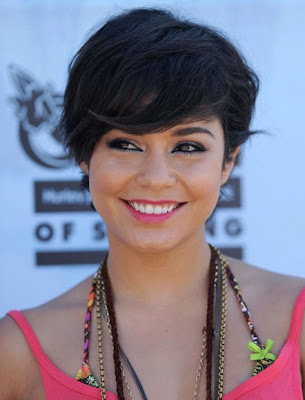
cute women haircuts 2013 Biogarphy

Source(google.com.pk)

During the Edwardian era, hairstyles were often full and somewhat "poufy." Ladies who had the luxury of a maid or attendant could achieve this look. The maid would wind her hair around balls of padding, which were called "rats." This sort of hairstyle was often accompanied by large Edwardian hats which were kept in place by jewelled hatpins and decorated with elaborate trimmings like ostrich feathers. Another important invention in hairstyling was made: permanent curling. Women could now have curly hair that would hold for months. The "Roaring Twenties" saw the emergence of a drastic new style: the Flapper style. Women wore their hair shockingly short in a bob haircut. As fashions tended away from the corsets and formality of the earlier era, so hairstyles followed this trend towards a more natural look. As the Edwardian era ended, new technology in movies made trends in hairstyles much more accessible to the general public. As such, actresses such as Clara Bow, who sported an early flapper cut, and singer Josephine Baker, whose exotic looks were closely watched and mimicked, brought their signature hairstyles into mainstream culture.
To create an authentic late Edwardian look, try a Flapper bob. Keep your hair bouncy and natural by avoiding heavy gels, mousses or styling aids. Or slick back your hair with hair gel for a more formal, bold look. If your hair is long, apply gel, pull the hair back and twist it into a bun. Pin the bun at the base of your neck. Place a glittery headband on your head, adjusting for comfort. Insert a feather into the left side of the headband, securing the feather with hairpins.
From sinners to stylists, from a famed general to ordinary women, Chinese hairstyles have evolved from symbols of ethnicity, class status and political alignment to an expression of individuality and style. Han Bingbin investigates.
To describe the significance of China's changing hairstyles is no simple task. In China, possibly more than in any other culture, hair has long had strong political and social meaning. Until as recently as the 1970s, hairstyles were not an easily changeable outlet for personal expression, but a symbol of everything from status and ethnicity, to political ideals.
In ancient times especially, people cherished their hair as a symbol of self-respect. Hair was as highly valued as the body. In the Spring and Autumn Period (770-476 BC), a punishment called kun required sinners to shave their hair and beard. Compared with other physical punishments this was considered more devastating because it insulted the soul.
During the Warring States Period (475-221 BC), the famed General Cao Cao was spared the death sentence, but instead of losing his head he had his hair cut off as a punishment for disobeying military orders. Significant proof of how seriously people took their hair in ancient times.
Hair in prehistoric times helped distinguish between the Han people and other ethnic groups, as the former tended to have it bound, while the latter usually grew their long hair to be disheveled. In the Tang Dynasty (AD 618-907), hairdos with different shapes evolved into a symbol of class status.
A history of hair
In his article The Psychology Behind Chinese People's Hairstyles, published in Beijing Science and Technology Life magazine in 2005, author Zhang Minglu said that in addition to being the symbol of ethnicity and class, hair's foremost function was a declaration of political alignment and a political weapon.

cute women haircuts 2013
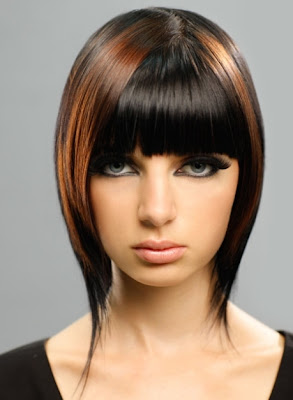
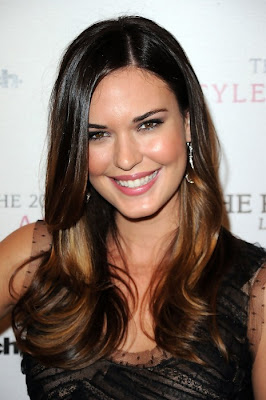
cute women haircuts 2013

cute women haircuts 2013

cute women haircuts 2013
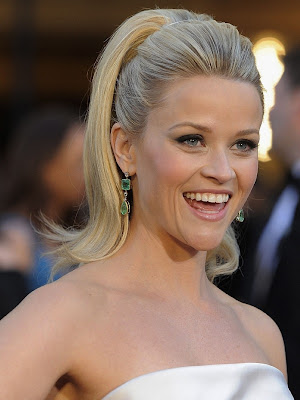
cute women haircuts 2013
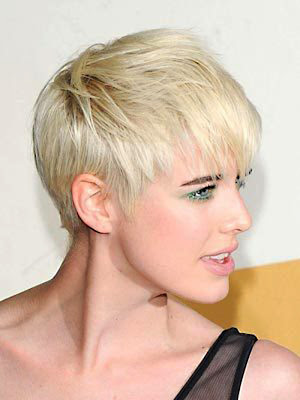
cute women haircuts 2013

cute women haircuts 2013
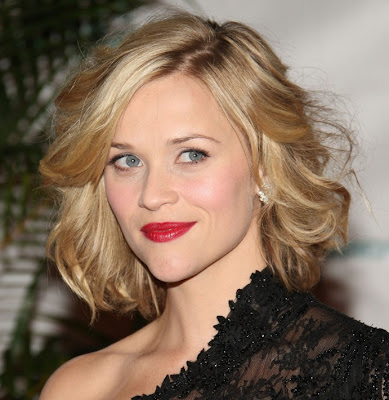
cute women haircuts 2013


cute women haircuts 2013